News
A runway for the Costa do Cacau: what is known about a new airport in the region
The Ilhéus runway can't grow, the Porto Sul airport has been asleep since 2010, and in Fojo there is no record of anything. Why the Costa do Cacau and the Costa do Dendê need a new runway.
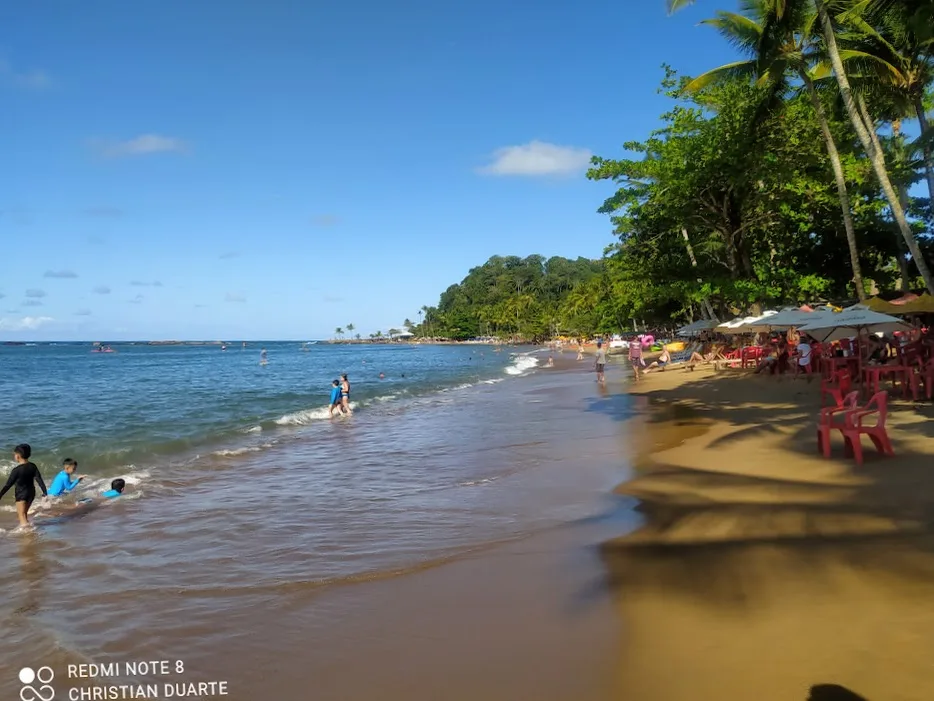
Anyone who lands in Ilhéus on a summer Saturday knows the scene: the plane banks over Pontal, the runway appears squeezed between the sea, the lagoon and the neighborhoods, and the landing is short. From there to Concha it's ninety minutes along the BA-001. This airport, which has just gained a new terminal, is the gateway to the entire Costa do Cacau and much of the Costa do Dendê, and also its limit. This is the story of a runway that can't grow, of a project that has been asleep since 2010 and of a conversation making the rounds in the village of Itacaré.
The runway that has reached its end
Jorge Amado Airport opened in 1939 as Pontal Airport, three kilometers from downtown Ilhéus. The runway is 1,577 meters long, of which 1,467 are usable, after the aviation agency ordered it shortened in 2007 because of its proximity to the highway. In 2024 the concessionaire delivered a 4,500-square-meter terminal with capacity for 1.2 million passengers a year, and that same year the airport set a record: more than 674,000 passengers on about 5,200 flights. Demand keeps climbing. For the October 12, 2026 holiday, the projection was 8,800 passengers, almost 40% more than the year before.
The terminal grew; the runway did not. In March 2026, when allocating R$ 70 million from the Novo PAC to an emergency braking system at the runway end, the Ministry of Ports and Airports was blunt: the runway "is surrounded by natural and urban obstacles," which rules out physical extension. Choosing the equipment rather than the asphalt is the official admission that Jorge Amado has reached its final size. That means smaller aircraft, fewer direct long-haul flights and, in summer, an operation at its limit: in January 2025, extra flights outnumbered scheduled ones.
What air access does for a destination
Just look south. Porto Seguro, with a runway for larger aircraft and international flights, closed 2025 with 1.3 million arrivals, a historic record, 204 international flights in the year and a summer projected at almost 900,000 visitors and more than R$ 2 billion. Ilhéus handles about a third of that. The difference isn't the beach; it's the runway.
The region has everything many destinations lack: Concha and Tiririca fifteen minutes' walk from each other, the Maraú Peninsula and Barra Grande two hours away, Comandatuba, the Taboquinhas waterfalls, the cacao. The Bahia Tourism Secretariat called the Congonhas–Ilhéus route, made permanent by Latam in October 2025, "fundamental" for the Costa do Cacau. Gol, when launching its scheduled Galeão flight in June 2026, described Ilhéus as the central hub of southern Bahia. Azul scheduled 90 extra operations from São Paulo for the 2026–2027 summer. In other words: the airlines want to come. What holds them back is the ground.
The airport asleep at Porto Sul
The idea of a new airport in Ilhéus is not new, and it is not a rumor. In the late 2000s, when the State designed the Porto Sul Complex in Aritaguá, the package was an "intermodal system": the port, the Ferrovia de Integração Oeste-Leste, export zones and a new international airport with two 3,000-meter runways. In March 2010 the environmental agency held a public hearing on the terms of reference for the impact study; the 2011 federal planning listed "Ilhéus: new airport, 3,000-meter runway," with implementation expected after 2015. Ponta da Tulha was mentioned at the time, on the BA-001, on the way to Itacaré.
The port, however, is moving ahead. It is a private terminal of Bahia Mineração, with a draft of up to 18 meters and capacity of 26 million tons a year. It received its preliminary license in 2012, its installation license in 2014, the work order in 2020, and in July 2026 the Fundo da Marinha Mercante approved R$ 6.59 billion in financing; delivery is cited for 2027. Three-quarters of the railway works are done. But in no document from 2024 to 2026 on Porto Sul, from the financing to the railway concession, does the airport appear. The project exists on paper from 2010 and has no status today. What is concrete is the obligation, declared by the State government in 2018 at the concession auction, that the concessionaire study a new site, and the assessment made at the time that the current Pontal land would be worth about R$ 300 million. Eight years later, the government program for the next term provides R$ 70 million for today's terminal and a new airport in another region, the Médio Rio de Contas.
And Fojo?
For some time now, talk has been circulating in Itacaré that an airport could be built in the Fojo region. It is worth stating clearly what is known: there is no public record of this idea. No study, ordinance, bill or official statement links Fojo, or any point in Itacaré, to a landing strip. The only aviation infrastructure registered in the municipality is a resort's helipad, dating from 2009.
Fojo is a quilombola community in Taboquinhas, on the right bank of the Rio de Contas, with 65 families and a 1,344-hectare territory recognized by Incra. In November 2025, a federal decree declared the area of social interest for final land titling. The community lies, like almost the whole municipality, within the Costa de Itacaré e Serra Grande Environmental Protection Area, created in 1993. Any project there would have to start with a conversation with this community and with environmental licensing, which in Itacaré is not an obstacle but an identity: the BA-001 that pulled the town out of isolation in the 1990s was only opened with the creation, as compensation, of the Serra do Conduru State Park.
What already exists along the way
While the big airport doesn't come, the region gets by with a network of smaller airstrips that travelers don't always know about. Comandatuba, in Una, became a public aerodrome in 2021 and receives scheduled Azul flights from São Paulo and Belo Horizonte. Barra Grande, in Maraú, has a private 1,000-meter runway, and Abaeté flies from Salvador to it and to Morro de São Paulo in half an hour. The State announced the extension of the Morro runway to 1,500 meters, with 70-seat aircraft in mind, and lists Canavieiras among the aerodromes being rehabilitated. In July 2025, the Tourism Secretariat announced a program to encourage regional air connectivity. None of this replaces a 3,000-meter runway in Ilhéus; all of it helps.
For those traveling now
Jorge Amado remains the way in: 65 to 75 kilometers from Itacaré, an hour and a half by car, with direct flights from São Paulo, Rio, Belo Horizonte and Salvador. Those who book early in summer find more options than ever. And anyone following the region knows that the next big leap for tourism on the Costa do Cacau and the Costa do Dendê depends less on a new beach than on a new runway. The guide covers every route available today in How to get to Itacaré.
Practical information
- Ilhéus Airport (IOS): 1,577 m runway (1,467 usable), 2024 terminal for 1.2 million passengers/year; record of 674,000 in 2024
- Official limit: runway extension unfeasible due to natural and urban obstacles (Ministry of Ports and Airports, March 2026)
- Porto Sul: Bamin terminal in Aritaguá, R$ 6.59 billion approved in 2026, delivery cited for 2027; the airport in the original 2010 project has no current status
- Fojo: quilombola community in Taboquinhas, 2025 titling decree; no public record of an airport whatsoever
- Regional airstrips: Comandatuba (Una, scheduled flights), Barra Grande (Maraú, private) and Morro de São Paulo (extension announced)
With information from Socicam, Panrotas, Movimento Econômico, Bahia Notícias, Agerba, Ministério dos Transportes, Mapa de Conflitos da Fiocruz, Comissão Pró-Índio de São Paulo, ANAC, Gol, Correio and A Tarde.